

Last Updated: November 17, 2026
Quick Summary
The best golf psychology books for quick results give you one repeatable routine you can use on the very next shot, not just ideas to admire. Grace Under Par builds identity under pressure, The Yips Cure calms short-game nerves in 14 days, The Proper Practice Formula carries range work onto the course, and Anchor Under Pressure offers a seven-step reset.
- Choose one book and practice one tool for three or four sessions before adding another.
- Use the 10-Second Reset after a bad shot to return to the present before the next one.
- Score Process Wins by tracking commitment and resets, separate from where the ball flew.
- Look for short chapters and a practice you can try on the range within twenty minutes.
Table of Contents
- Why Your Practice Game Disappears on the First Tee
- What Makes a Golf Psychology Book Deliver Quick Results
- Grace Under Par: Building Identity Before Your Next Round
- The Yips Cure: Calming Your Short Game in 14 Days
- The Proper Practice Formula: Replacing Swing Thoughts With One Target
- Anchor Under Pressure: A Pre-Shot Routine You Can Use Today
- Start Your Mental Game Plan This Week
- Frequently Asked Questions
You hit it beautifully on the range. Smooth tempo, solid contact, a little draw on every ball. Then you step onto the first tee with a group watching, and suddenly your swing feels like it belongs to someone else. Audience of One Golf was built for exactly this moment. Dr. Paul S. Callaway, PT, PhD, helps golfers who play well in practice but tighten up when it matters, and the hidden cause is almost never the swing itself.
Golf psychology books can help close that gap, but only if they give you something you can use on the next shot. The books below each take a different angle on the mental game, and each one has a clear job to do for your round.
Quick picks: For identity and faith under pressure, start with Grace Under Par. For short-game nerves, The Yips Cure. For range work that carries onto the course, The Proper Practice Formula. For a pressure reset you can use mid-round, Anchor Under Pressure.
Why Your Practice Game Disappears on the First Tee
When the stakes rise, most golfers start playing for an audience. They want to look capable, avoid embarrassment, and protect a score. That shift changes the swing, not because the body forgot how to swing but because the mind has started running the show. Golf psychology books can help because they teach you to choose one target and one thought, then commit to it.

Scripture speaks directly to this. "Do not be anxious about anything, but in every situation, by prayer and petition, with thanksgiving, present your requests to God" (Philippians 4:6 NLT). Keep that verse in mind as you read, because the best books treat the mental game as something you bring before God, not something you fight alone.
What Makes a Golf Psychology Book Deliver Quick Results
A book delivers quick results when it hands you one small, specific practice you can run this week, not a philosophy you admire from a distance. Before you invest hours in any title, run it through four filters.
1. It gives you a repeatable routine. Look for a named sequence you can run on the tee, on the practice green, or on the range. A routine replaces a wandering mind with a fixed set of steps. Dr.
2. It lets you score your process, not just your ball flight. Quick results come from measuring the thing you actually control. Look for a book that teaches you to log Process Wins, did you pick a target, did you commit, did you run your reset, separate from where the ball went.
3. It hands you a reset you can use after a bad shot. Every golfer needs a short, physical way to come back to the present. The 10-Second Reset is the benchmark: about ten seconds of breath and a single cue to clear the last shot before you walk to the next one.
4. It fits the time you actually have. Most golfers read in ten-minute windows, a chapter before bed, a few pages in the truck before a round. A quick-results book is built for that rhythm: short chapters, one idea each, and a practice at the end you can try the same day.
Here is a simple test. Open to any chapter and ask, "Could I try this on the range in the next twenty minutes?" If the answer is yes, the book is easy to put to use right away.
Watch out: reading a book straight through and waiting for a breakthrough usually disappoints. Pick one tool, run it for three or four sessions, and let it become yours before you add the next one.
Scripture gives this filter a foundation. "Whatever you do, work at it with all your heart, as though you were working for the Lord rather than for people" (Colossians 3:23 NLT).
Use these four filters to judge any golf psychology book before you invest hours in it.
| Filter | What to look for | Quick check |
|---|---|---|
| 1. Repeatable routine | A named sequence you can run on the tee or range | Is there a fixed set of steps? |
| 2. Process scoring | Process Wins tracked apart from ball flight | Can you log commitment and resets? |
| 3. Reset tool | A short physical way to recover after a bad shot | Is there a ten-second reset? |
| 4. Fits your time | Short chapters, one idea each, a same-day practice | Could you try it on the range in twenty minutes? |
Grace Under Par: Building Identity Before Your Next Round
Grace Under Par is the foundation of the Audience of One Golf system. Across 15 chapters, it shows how to separate your identity from your scorecard and replace fear with faith-filled thinking.
Start it at the chapter on identity, then pair it with the Study Guide to turn each principle into a habit. You can get the full book and Study Guide and start building that identity today. The book includes a free audiobook MP3, so you can listen on the drive to the course.
Best for: golfers whose confidence drops every time the score drops. Skip if: you only want a technical fix for a single shot.
The Yips Cure: Calming Your Short Game in 14 Days
Short putts and chips that suddenly feel impossible often involve a fear-and-tension pattern. The Yips Cure is a 14-day mental game system that walks you through a pre-shot routine for putts and chips.
Begin with the first day's plan and practice it on the practice green before you try it on the course. The dedicated Yips Cure field guide walks you through each step. The goal is calm, repeatable hands, not perfect strokes.
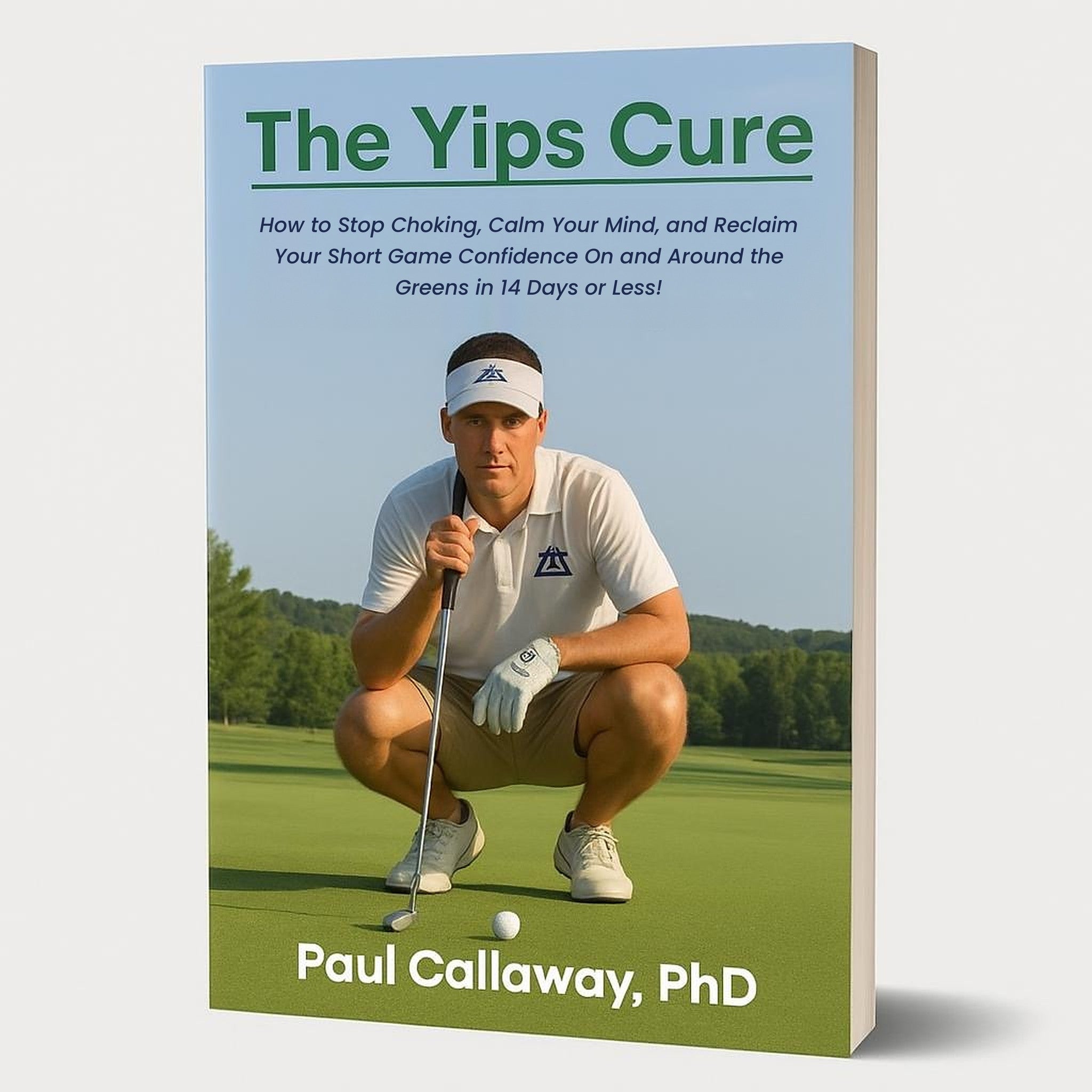
Best for: golfers losing strokes around the greens. Skip if: you have no short-game tension at all.
The Proper Practice Formula: Replacing Swing Thoughts With One Target
Many golfers practice like thinking machines, running through body and club positions on every ball. The Proper Practice Formula replaces that with one conscious thought over the ball: target. The nine-step range formula moves you through Decide, Imagine, Feel, Commit and Play, so your practice starts to look like your round.
Use it on the range three times this week, scoring each session by process rather than by how far each ball flew. The Proper Practice Formula guide explains how to make the switch.
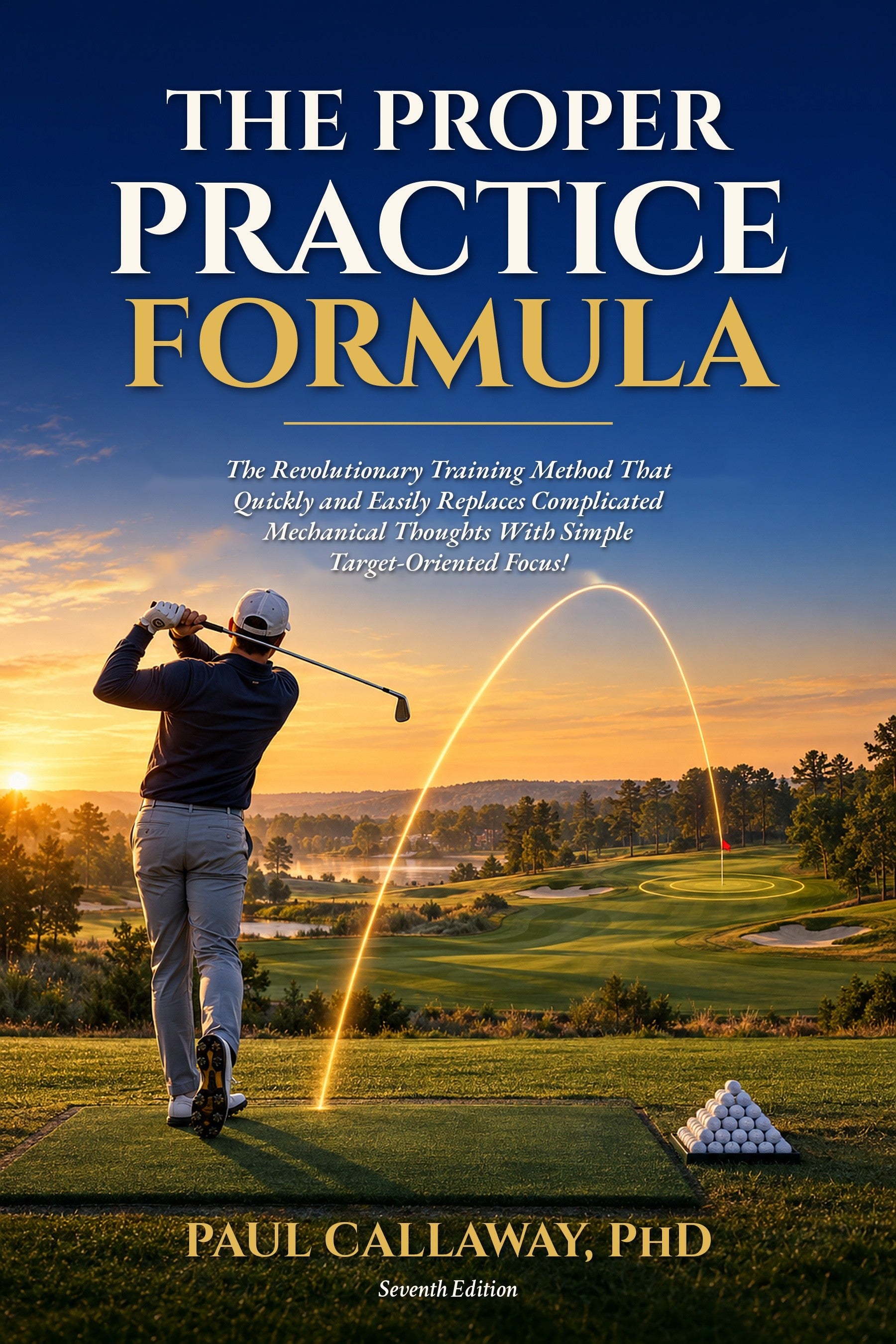
Best for: golfers whose range game never shows up on the course. Skip if: you prefer detailed mechanical drills.
Anchor Under Pressure: A Pre-Shot Routine You Can Use Today
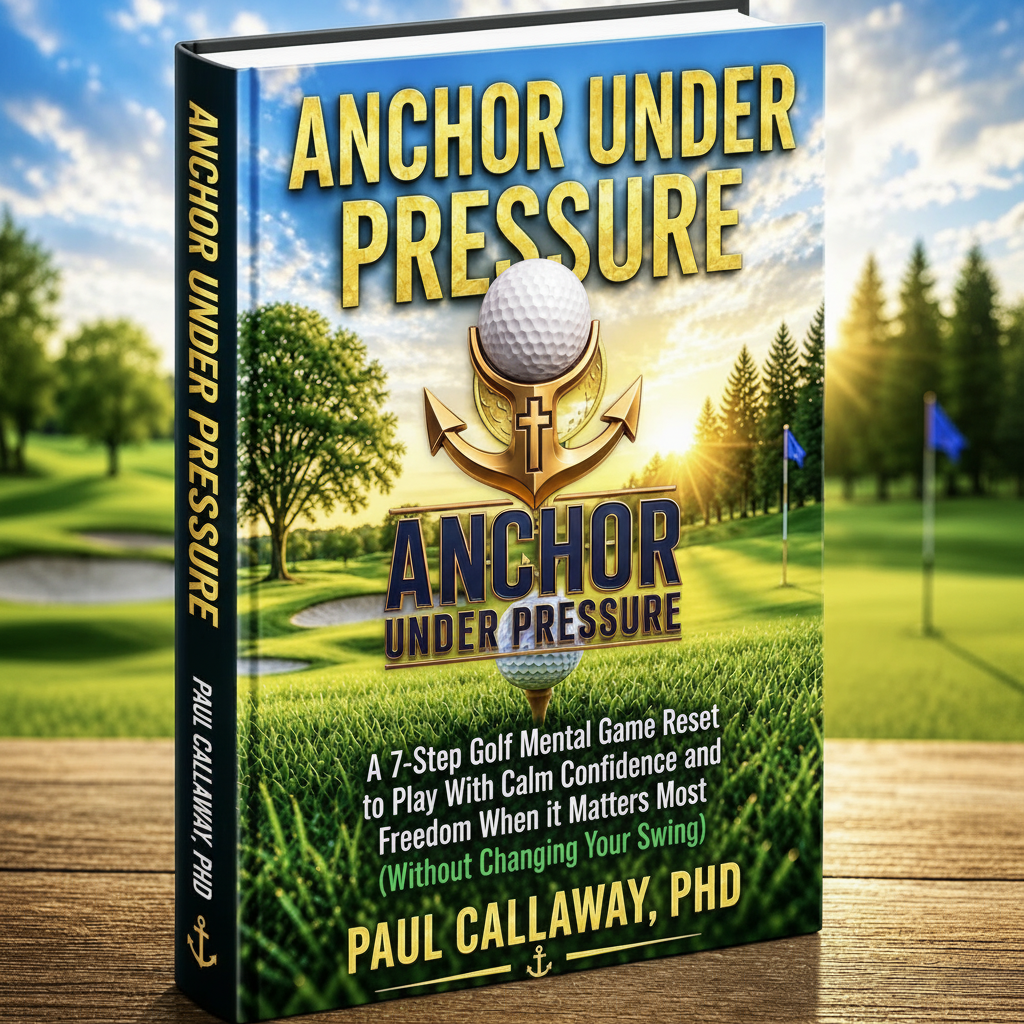
Anchor Under Pressure is a seven-step reset you can use on the very next shot. It teaches you to recognize your pressure pattern and reset when pressure rises.
Best for: golfers who freeze on the first tee or after a bad hole. The Anchor Under Pressure guide teaches the full seven-step reset. Skip if: you want a book focused only on the physical swing.
Start Your Mental Game Plan This Week
Most book lists end with "pick one and get started." This one ends with a plan you can run before your next tee time. Here is a seven-day sequence you can run alongside whichever book you chose.
Day 1, Choose one book and one tool. Read only the first chapter or section. Then write down the single tool you will practice this week. One book, one tool. If you picked Grace Under Par, your tool is the First-Tee Declaration.
Day 2, Build your pre-shot routine on the range. Take twenty balls and run your chosen tool on every one. Score the session with Process Wins: how many balls did you commit to a target and a thought before you swung?
Day 3, Practice the reset. Hit a shot, then deliberately create a poor result, a thin one, a pull, a chunk, and run the 10-Second Reset before the next ball. Ten seconds of breath, one cue, then step in. You are training the comeback, not the mistake.
Day 4, Write your First-Tee Declaration. One or two sentences you will say to yourself on the first tee. Keep it about identity and commitment, not about score. Something like, "I play for an audience of One, and I commit to my target." Say it out loud three times before you go to bed.
Day 5, Take it to the practice green. Run your pre-shot routine on ten putts and ten chips. This is where nerves show up first, so it is the best place to test whether your routine holds under a little pressure.
Day 6, Play a pressure round. Play nine holes and use your tool on every shot. Keep a simple Process Wins tally on the scorecard: one mark for a committed target and thought, one mark for a reset after a poor shot. Add them up at the end. That total is your real score for the day.
Day 7, Review with Catch, Check, Change. Catch the pattern that showed up under pressure. Check it against what the book taught you. Change one thing for next week. Then choose your next tool and start the cycle again.
This follows the spirit of the C.O.D.E. Framework, which asks you to build disciplined preparation and steady focus one practice at a time. It is also how the mental game becomes a habit rather than a hobby.
A single routine, practiced this way, can help change how the first tee feels. If you want a starting point, take the free Audience of One Score: https://audienceofonegolf.com/score. Or book a free 20-minute strategy session to talk through which book and which tool fit your game: https://go.oncehub.com/PaulCallaway
Take the free Audience of One Score at https://audienceofonegolf.com/score, or book your free 20-minute strategy session at https://go.oncehub.com/PaulCallaway. Your identity is settled before you tee off, and the mental game is something you can train, one target and one thought at a time.
Frequently Asked Questions
What is the best golf psychology book?
The best golf psychology book depends on the problem you want to solve first. If your identity rides on your score, Grace Under Par from Audience of One Golf addresses that foundation through biblical truth and practical mental strategies. If you struggle with the short game, The Yips Cure focuses on the fear-and-tension pattern behind putting and chipping trouble. If you overthink swing mechanics on the range and carry that noise onto the course, The Proper Practice Formula trains a single target-focused thought. Pick the book that matches your biggest on-course challenge, then apply one tool in your next practice session.
How long does it take to see results from golf mental training?
Results vary by golfer, and consistent practice of one tool is the best way to see what works for you. Deeper change, like steadier nerves over a short putt, usually takes several weeks of regular repetition. The Yips Cure lays out a 14-day, day-by-day plan, so you can measure progress as you go. Track Process Wins, such as a clear target and a full routine, instead of judging each round only by the score.
Can reading a golf psychology book help with confidence under pressure?
Yes, when you practice what the book teaches rather than only reading it. Confidence under pressure often comes from committing to a target and a routine rather than trying to control the outcome. Anchor Under Pressure is a seven-step reset designed for the moments when pressure rises. Use it on the range first, then carry it onto the first tee, so the response is already familiar when it matters most.
How can I apply a golf psychology book during a round?
Start with one tool and use it on every shot. Before each swing, use One Target, One Thought: pick the target and hold a single thought. After each shot, use the 10-Second Reset to let the last shot go before you choose the next one. The Proper Practice Formula gives a step-by-step range routine you can rehearse, so it feels more natural on the course. Keep it simple, and build on one habit at a time.
